
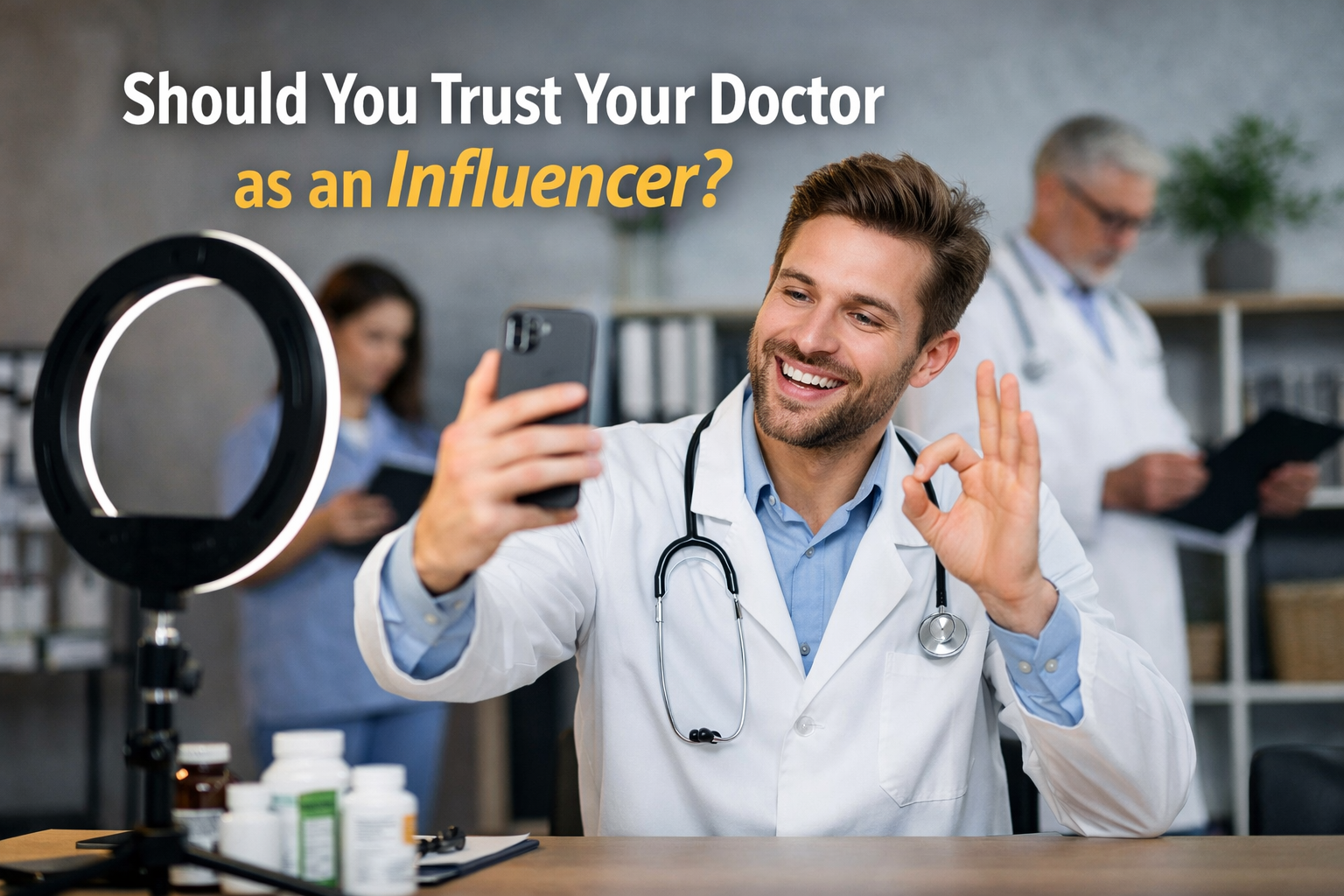
Should Your Doctor Be an Influencer? What Patients Need to Know
In today’s world, it seems like everyone is on social media — including healthcare providers. While education and outreach can be valuable, patients should be cautious when their doctor appears more focused on growing followers than delivering quality care.
Healthcare is not entertainment. It’s a profession built on trust, ethics, and evidence-based practice.
Education vs. Influence
There’s nothing wrong with a doctor sharing educational content online. In fact, reputable organizations like the American Medical Association encourage responsible use of social media to improve public health awareness.
However, there’s a difference between:
- Sharing credible, research-backed information
- Posting sensational or controversial content to drive engagement
- Promoting products for commissions
- Prioritizing viral trends over patient outcomes
If a provider’s social media presence feels more like marketing than medicine, it’s worth asking questions.
Red Flags to Watch For
Patients should be wary when:
1. Everything Is a “Miracle.”
Healthcare rarely offers overnight cures. Be cautious of exaggerated claims or dramatic before-and-after transformations.
2. Products Are Constantly Being Sold.
If your provider regularly promotes supplements, devices, or programs tied to affiliate links, their financial incentives may conflict with your best interest.
3. Care Is Oversimplified for Views.
Complex medical conditions deserve thoughtful, individualized evaluation — not 30-second hot takes.
4. Online Persona Doesn’t Match In-Office Care.
If appointments feel rushed while social media activity is constant, priorities may be misaligned.
Why This Matters
Trust is foundational in healthcare. According to the Centers for Disease Control and Prevention, patient trust significantly impacts treatment adherence and outcomes. When providers blur the line between education and entertainment, that trust can erode.
Medicine requires:
- Careful evaluation
- Ethical decision-making
- Continued education
- Focused patient interaction
These responsibilities should always outweigh the pursuit of followers, sponsorships, or online fame.
A Healthy Standard
Ask yourself:
- Does this provider reference credible sources?
- Do they acknowledge nuance and uncertainty?
- Do they prioritize patient relationships over public image?
- Would I feel confident if this content weren’t edited for views?
The best healthcare providers may not be the loudest online — but they are consistent, ethical, and focused where it matters most: on their patients.
Social media can be a tool. It should never become the mission.